Successful AI implementation isn’t just about tech. It’s about leadership and change management. There’s no end of hype about AI, but the numbers tell us that not everyone is convinced. From the ecological impact of datacentres to job displacement, AI creates as much fear as excitement. So it would be understandable if your team approached it with scepticism, or even hostility.
Thoughtful leadership therefore becomes crucial.
It’s not about pitching the technology to your team and expecting them to work around it. It’s about harmonising your tech with your talent.
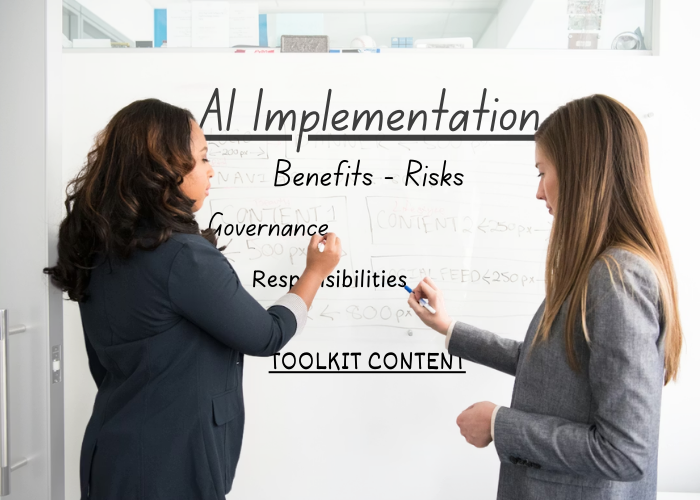
The role of leadership in AI implementation
For leaders of teams faced with AI integration, the challenge is bringing clarity, empowerment and purpose.
This involves:
- Explaining the benefits for team members: Don’t just explain the ‘what’. Make sure everyone understands the ‘why’ in terms that matter to them. Outline how it will alleviate admin and create space for more engaging, creatively rewarding work.
- Creating a dialogue: Nothing breeds dissent like a top-down mandate. AI implementation should be a conversation. One that grows out of the team’s questions, concerns and criticisms. They must feel like an active part of AI orchestration, rather than passive recipients.
- Creating cultures of experimentation: AI integration should be a journey of discovery. One that you and your team undergo together. Create sandboxed environments where trial, error, experimentation and refinement can happen without derailing operations
- Modelling uses and behaviours: Leaders can’t just be cheerleaders for the tech. Show that you can walk the walk by modelling best practice. Where staff are unsure of how to leverage AI tools, they should be able to look to you for practical guidance.
Once teams understand the purpose behind AI adoption, they need clear parameters for how it will work in practice. Once these are defined, creative teams can confidently scale their outputs without sacrificing quality.
Create guardrails to build confidence
Confident AI implementation starts with a clear understanding of how the technology should be used.
This begins with defined use cases. AI works best when it removes duplication and streamlines workflows. Show staff that the orchestration will play to AI’s strengths, helping them reclaim the time and energy to play to theirs.
Such cases might include:
- Compressing research into usable insight
- Repurposing existing content
- Reiterating first drafts
- Creating standardised templates or toolkit materials
Guardrails are also crucial. Teams should be clear where AI should not be used and where their expertise is prioritised. Fact checking, compliance-heavy content, sensitive messaging and specialist editing should always remain human-led. Such boundaries reassure staff, protect quality and reduce AI’s inherent risks.
Governance and change management
Effective governance builds teams’ trust and helps ensure that the tech is working for them rather than vice versa.
It requires:
- Clearly defined responsibilities: Teams need to know who maintains prompt libraries, who reviews outputs and who governs models and data use. Any ambiguity can quickly undermine confidence.
- Investment in training: Training should be continuous and cyclical. Short learning loops allow teams to share what worked, identify what didn’t, and adjust accordingly.
- Toolkit content: Shared prompt libraries and templates can evolve into operational assets when everyone knows where to find them and how to use them.
- Experimentation: Create a space for healthy experimentation. Small pilots, AB testing AI-augmented and human-only workflows help AI feel useful rather than intimidating.
- Reciprocal feedback: Keep an open door when it comes to staff feedback. Be receptive when they share their wins and their pain points. Likewise, celebrate the time saved and the creative space reclaimed.
Even with an enthusiastic team, integrating AI into creative workflows can be daunting.
Our new content supply chain service combines expert strategy with smart automation and unrivalled copywriting capability.
If you’d like to know more, call us now on 0845 862 4646, or email info@writearm.co.uk