Since the advent of genAI, the production of technical user documentation has generally followed one of two paths: either a specialist writer produces everything manually, or someone generates a draft using a large language model (LLM) and a specialist cleans up the text. Both methods create a document that is merely a temporary snapshot, which is often only accurate on the day it is finished.
As engineering teams update software, hardware, or firmware, the documentation begins to drift out of step. Keeping document suites updated through manual rewrites is slow and expensive and, in many cases, fraught with regulatory risk. When you are deploying complex systems that evolve continuously, static documentation simply cannot keep pace.

Photo: Daniel McCullough / Unsplash
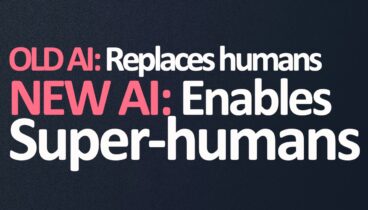
Now a new form of AI is available that allows user-documentation to properly keep pace with products’ technical evolution.
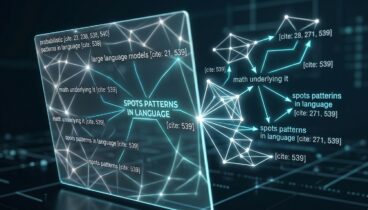
Synthetic Deterministic Cognitive Intelligence (SDCI™) is still largely below the tech industry’s radar, but it’s set to transform the AI landscape. Unlike LLMs, which predict word sequences based on probability, SDCI selects them based on a rules-based cognitive architecture.
So, instead of relying on manual tracking of every change in your documentation or letting an LLM improvise technical facts, the system can handle the necessary structural thinking. It can therefore accurately calculate:
The LLMs are then restricted to refining the prose for clarity.
SDCI delivers three critical advantages for complex, regulated, or safety-critical operations.
When multiple writers or separate editing sessions touch a suite of manuals, terminology shifts and the depth of information becomes uneven. Because SDCI relies on an underlying logic engine rather than human oversight, every document remains uniform. Whether an operator reads the installation guide, the troubleshooting reference, or the safety procedures, the components are described identically.
When developers modify a component or update firmware, the corresponding documentation updates with it immediately. The manuals match the specific hardware version delivered to the client, providing a clear record of what changed and why, so nothing falls out of sync.
For heavily regulated industries like pharma and fintech, the primary danger of genAI is text drift and unverified data. Standard LLMs create text based on probability, meaning they generate unverified responses every time they are prompted. SDCI removes this unpredictability and, crucially, it maintains a complete audit trail behind every revision. This provides a level of accountability that manual editing or standard AI tools cannot match.
SDCI reads only what it needs to and only holds clients’ information for the duration of the production. So, clients’ IP remains secure by design.
Most technical writing services sell you static text that requires constant, manual maintenance to survive review loops. SDCI provides a system that ensures your documentation remains correct, compliant, and fully consistent with your engineering output, even while your products are constantly evolving.
Write Arm is the first copywriting agency globally to adopt SDCI. If you are managing high-stakes technical documentation and need to eliminate the risk of versioning errors, contact us to find out more about this game-changing technology. Call us now on 0845 862 4646, start a live chat, or email info@writearm.co.uk.